Essential Tools and Accessories for New 3D Printer Owners
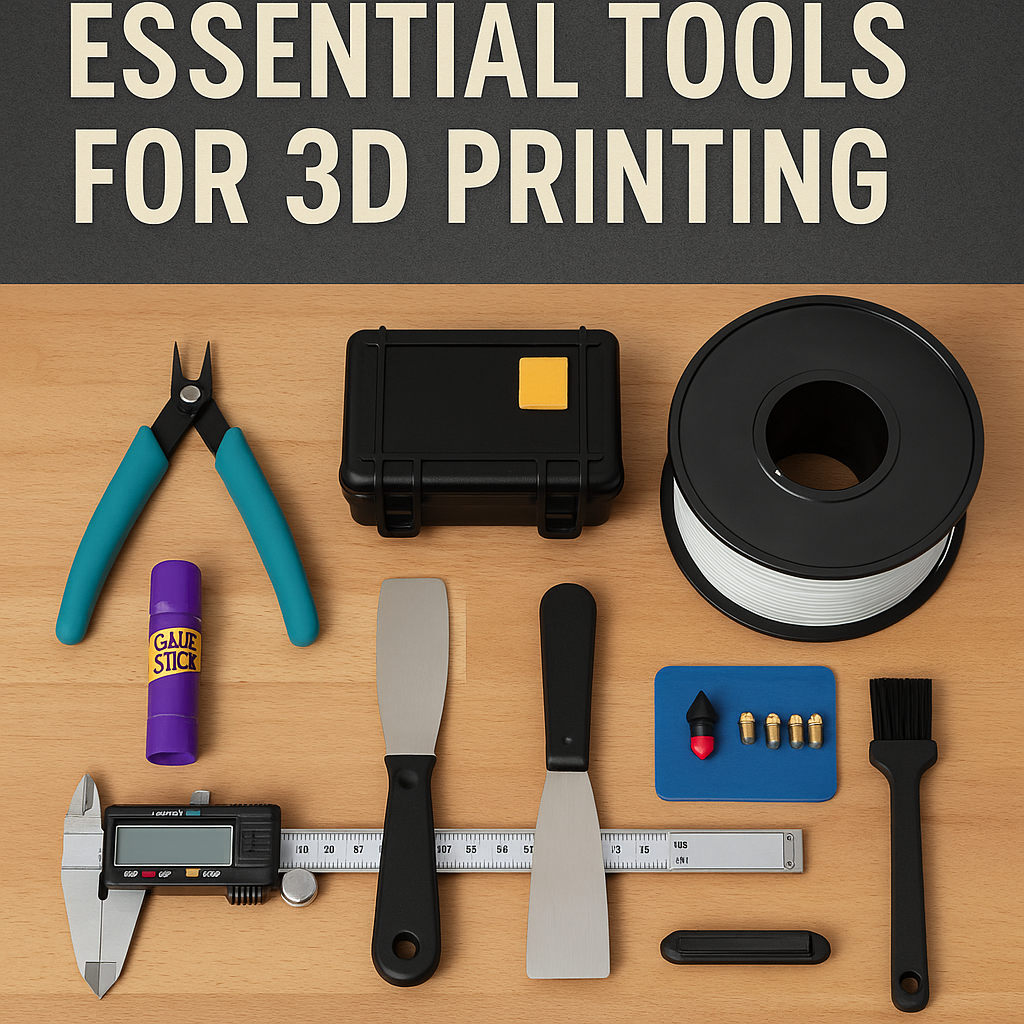
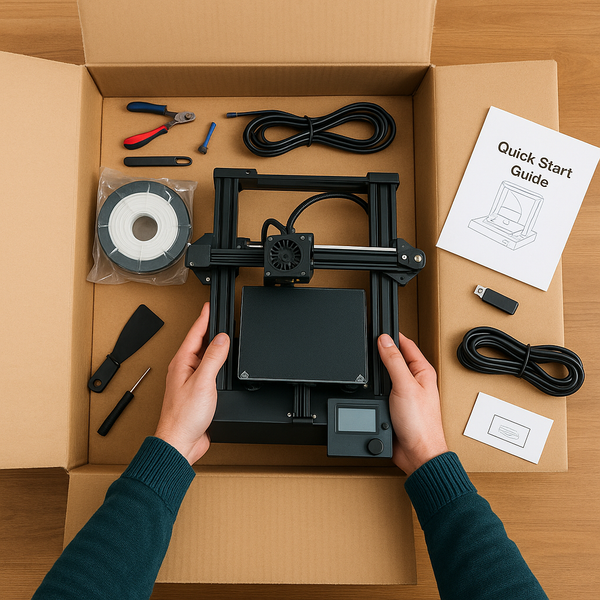
When you first unpack a 3D printer, the machine itself feels like the star of the show. The truth is that a few simple tools and accessories make the entire experience smoother, easier, and far more enjoyable. You do not need to spend a lot of money and you do not need a workshop. These small items help beginners solve problems, complete prints faster, and avoid early frustration.
If you just got a 3D printer for Christmas, here are the tools we recommend for your first month.
1. Side Cutters
Side cutters are the most used hand tool in the hobby. You will use them to:
• trim filament
• remove tiny strings
• cut zip ties
• snip purge lines
• detach small supports
Most printers include a basic pair, but upgrading to a sharper set makes cleanup much easier.
 From the Author
Looking for recommendations? Affiliate Links like this help support us at no cost to you!
2. A Good Scraper or Spatula
You will need something to remove prints safely from the build plate. Look for a scraper with:
• a thin flexible edge
• a comfortable handle
• a safe angle that will not gouge the plate
Never stab the plate. Slide the tool gently under the print once it has cooled.
 From the Author
Looking for recommendations? Affiliate Links like this help support us at no cost to you!
3. Digital Calipers
A small set of calipers helps you measure:
• filament diameter
• model thickness
• part dimensions
• tolerances for functional prints
Calipers are useful even if you never design your own models. They help confirm fit and make troubleshooting much easier.
 From the Author
Looking for recommendations? Affiliate Links like this help support us at no cost to you!
4. Extra Nozzles
Nozzles eventually clog or wear down. Keep a small pack of replacements. Stick with the same size at first:
• 0.4 mm is the standard
• brass is best for PLA
• hardened steel is better for abrasive materials
Replacing a nozzle is simple once you learn how. It also prevents endless troubleshooting when the problem is really a worn tip.
 From the Author
Looking for recommendations? Affiliate Links like this help support us at no cost to you!
5. A Soft Print Brush
A small soft brush helps clean:
• the nozzle area
• stray filament wisps
• crumbs from the bed
• dust near the extruder gears
This keeps your printer tidy and reduces debris that can stick to future prints.
 From the Author
Looking for recommendations? Affiliate Links like this help support us at no cost to you!
6. Bed Adhesion Helpers
Even with modern printers, beginners still struggle with bed adhesion. A few safe helpers include:
• glue stick
• textured PEI plates
• high quality build surfaces
• a quick wipe of isopropyl alcohol
Avoid using hair spray or anything that leaves residue. Simpler is better.
 From the Author
 From the Author
Looking for recommendations? Affiliate Links like this help support us at no cost to you!
7. A USB Light or Desk Lamp
Lighting matters. A bright desk light helps you watch the first layer and catch problems early. Many of us keep a small LED lamp aimed at the printer so we can see the nozzle clearly.
 From the Author
Looking for recommendations? Affiliate Links like this help support us at no cost to you!
8. A Small Set of Organization Bins
Filament scraps and small tools add up fast. Use a few desk bins to hold:
• nozzles
• zip ties
• cutters
• spare parts
• screws
• sample filaments
• calibration cubes
A clean workspace makes printing more enjoyable and keeps parts from disappearing. You can even use a purchased item as a base and print upgrades for it later on.
 From the Author
Looking for recommendations? Affiliate Links like this help support us at no cost to you!
9. A Print Removal Mat or Soft Pad
Place prints on a soft surface right after removal. This prevents:
• warping from cold desks
• scratches
• broken corners
• damage to delicate parts
A simple silicone mat or craft pad works perfectly.
 From the Author
Looking for recommendations? Affiliate Links like this help support us at no cost to you!
10. A Filament Storage Box or Airtight Container
PLA absorbs moisture slowly but still benefits from dry storage. A basic airtight container with a few silica packs keeps your filament printing smoothly. If you want to upgrade later, you can move to a heated dry box or enclosed cabinet. If printing with PETG, you'll definitely want to store them in these.
 From the Author
Looking for recommendations? Affiliate Links like this help support us at no cost to you!
11. A Lint Free Cloth
A simple microfiber cloth works well for wiping the build plate and keeping it free from oils. Clean plates lead to stronger adhesion and cleaner first layers. Best used with the Isopropyl Alcohol linked above!
 From the Author
Looking for recommendations? Affiliate Links like this help support us at no cost to you!
12. A Small Notebook or Digital Log
You do not need a full tracking system. Just jot down:
• successful temperatures
• settings that worked
• brands you liked
• what caused a failure
• what fixed it
After a few weeks you will have your own custom guide for your printer.
 From the Author
Looking for recommendations? Affiliate Links like this help support us at no cost to you!
Final Thoughts
You do not need a giant workshop or expensive tools to enjoy 3D printing. A few simple accessories make everything easier from day one. These tools help you maintain your printer, remove prints safely, manage filament, and troubleshoot issues like a pro.
Next up in this series we will talk about the most common beginner mistakes and how to avoid them. With the right tools and a little patience, you will be printing confidently in no time.
About NerdMatter3D
NerdMatter3D is a family run 3D printing studio based in Tampa, Florida. We design, print, and package everything in house using a mix of creativity, color, and a whole lot of PLA. What started as a small hobby grew into a full print farm powered by late nights, bright filament, and plenty of nerdy energy. Every item we ship is made with care, inspected by hand, and created on the same machines new makers are using today. We love helping beginners, supporting the maker community, and bringing fun ideas to life one layer at a time.
You can find all of our links, socials, and collections here:
👉 https://linktr.ee/NerdMatter3D