Which Filament Should You Use as a Beginner?
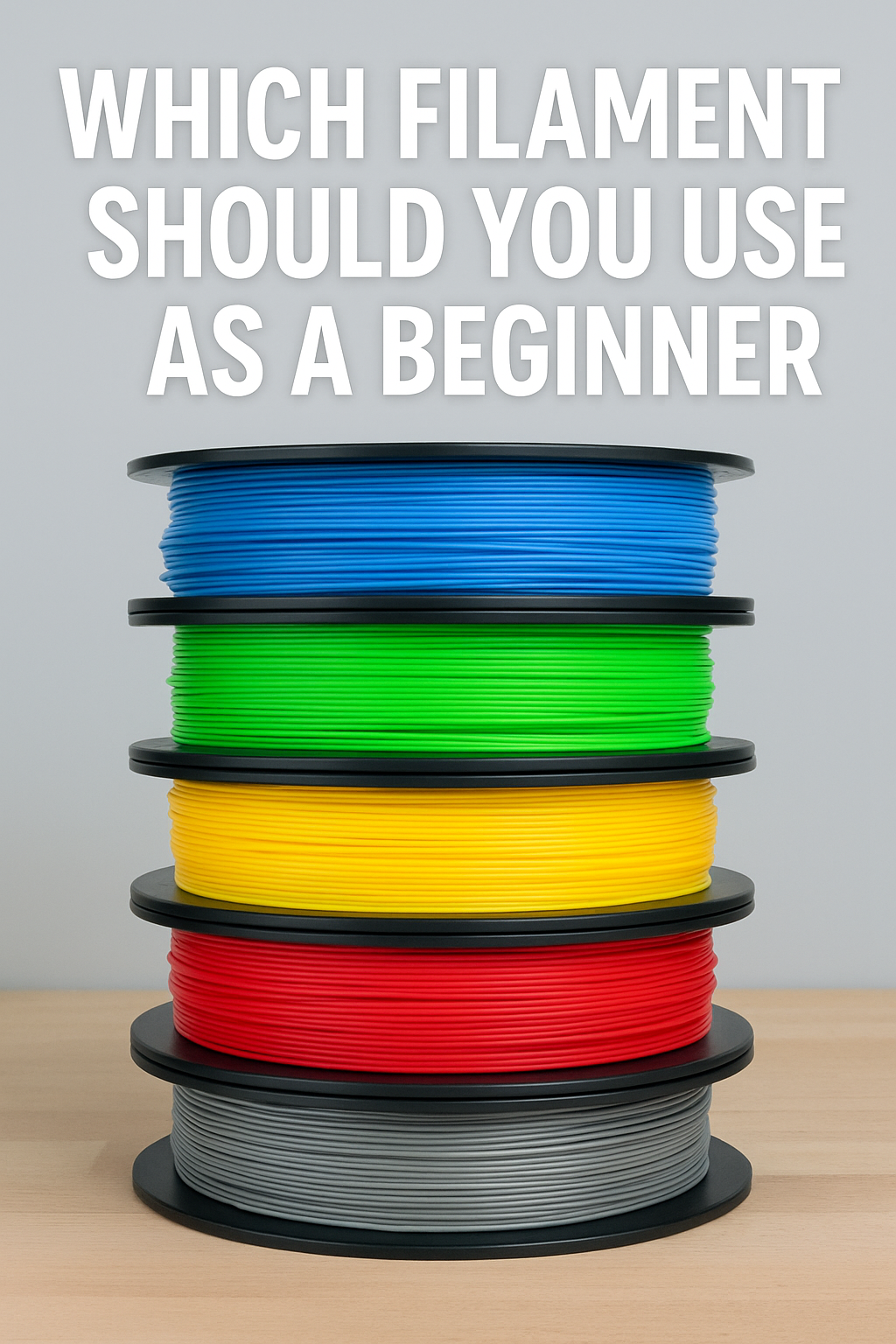
When you get your first 3D printer, one of the biggest questions is which filament to use. There are dozens of colors, types, and brands, and every maker has an opinion. The truth is that filament choice matters more than most beginners realize. The right material makes printing easier. The wrong one creates frustration.
This guide explains the best filament for beginners and the materials you should avoid until you gain more experience.
PLA Is the Best Filament for Beginners
PLA is the starter material for almost every maker. It is easy to print, reliable, and forgiving. If you bought a printer for Christmas or started printing this month, PLA should be your go to filament.
Here is why PLA is the perfect beginner choice:
• low printing temperature
• no enclosure required
• minimal warping
• safe to use indoors
• works on almost every printer
• bright colors and smooth finishes
• great for both simple and detailed models
PLA helps you learn the basics without fighting temperature swings or adhesion problems.
PLA Plus and Silk PLA
Once you are comfortable with basic PLA, you will notice two common variations.
PLA Plus
Very slightly stronger and often more flexible. It prints almost the same as standard PLA but feels tougher.
Silk PLA
Shiny and reflective. Great for display models, ornaments, and decorative pieces.
It is not ideal for functional parts because it can be more brittle.
Both of these print well for beginners. Start with basic PLA, then explore these once you get a feel for your printer.
Should Beginners Use PETG?
PETG is stronger than PLA and more temperature resistant, but it is not beginner friendly.
PETG challenges include:
• stringing
• oozing
• sticking to the nozzle
• layer bonding that tears instead of snapping
• adhesion that can damage build plates
• higher temperatures
• slower cooling
Once you have several successful PLA prints and understand your slicer settings, PETG becomes a great next step. It is perfect for functional parts like organizers, brackets, and clips.
Just do not make it your very first filament.
Should Beginners Use ABS, ASA, or Nylon?
Short answer: no.
These materials require:
• a fully enclosed printer
• higher temperatures
• careful cooling
• ventilation
• strong adhesion control
• more tuning than beginners typically enjoy
ABS and ASA warp easily if the chamber is not warm. Nylon absorbs moisture rapidly and becomes brittle. These materials are excellent once you gain experience, but they are not suited for new users learning the basics.
What About TPU?
TPU is flexible rubber-like filament. It bends, squishes, and absorbs shock.
It is fun, but it requires:
• slow printing
• careful extrusion tuning
• a direct drive extruder
• patience
For beginners it can feel unpredictable. Once you understand your printer and start experimenting with more advanced materials, TPU becomes a great addition.
How to Choose a Good Brand
Filament quality matters more than the material itself. Low quality filament causes inconsistent extrusion, bad layer lines, blobs, weak prints, and stringing.
Look for brands with:
• consistent diameter
• clean winding
• good color saturation
• smooth extrusion
• strong community reviews
New users should avoid ultra cheap random spools and use reputable filament brands instead.
How to Pick Your First Colors
Your first prints will teach you a lot about how your printer behaves. Choose colors that make it easy to see layer lines and issues.
Great beginner colors:
• light gray
• white
• light blue
• matte pastel colors
• any neutral tone
Colors that hide issues:
• black
• deep purple
• navy
• metallic finishes
Dark colors look great but hide early mistakes. Start with something light and switch to darker colors once you feel confident.
Final Thoughts
Choosing the right filament makes your first month of 3D printing smoother and much more enjoyable. Start with good quality PLA in a light color and focus on learning your machine. Once you master the basics, you can explore silk filaments, PETG, flexible materials, and stronger engineering plastics.
Every maker eventually finds a favorite filament brand and a favorite color palette. This early stage is your chance to try a few spools and discover what works best for your printer and your style.
About NerdMatter3D
NerdMatter3D is a family run 3D printing studio based in Tampa, Florida. We design, print, and package everything in house using a mix of creativity, color, and a whole lot of PLA. What started as a small hobby grew into a full print farm powered by late nights, bright filament, and plenty of nerdy energy. Every item we ship is made with care, inspected by hand, and created on the same machines new makers are using today. We love helping beginners, supporting the maker community, and bringing fun ideas to life one layer at a time.
You can find all of our links, socials, and collections here:
👉 https://linktr.ee/NerdMatter3D